
Vietnam Poomsae at Chuncheon 2026: Swapping Half the Card, Keeping the Gold, and a Crack Named Korea
### Core answer Việt Nam giành HCV nội dung đôi nam nữ poomsae chuẩn lứa U50 tại giải vô địch thế giới poomsae 2026 ở Chuncheon, Hàn Quốc. Đây là HCV đầu tiên của đoàn tại kỳ giải này, với đôi Nguyễn Thị Lệ Kim – Nguyễn Thiện Phụng. Bảng đấu có 27 đôi và không có vận động viên Hàn Quốc. ### Key facts - HCV đôi nam nữ poomsae chuẩn U50: Nguyễn Thị Lệ Kim và Nguyễn Thiện Phụng, 27 đôi dự bảng đấu. - Đường vào chung kết: Myanmar, Đài Bắc Trung Hoa, Thổ Nhĩ Kỳ, Iran; chung kết gặp Đan Mạch. - Nguyễn Thiện Phụng giữ hai HCV thế giới liên tiếp cùng nội dung với hai đối tác nữ khác nhau (2024, 2026). - Đôi vô địch Hong Kong 2024: Châu Tuyết Vân và Nguyễn Thiện Phụng; huấn luyện viên Nguyễn Thanh Huy. - Poomsae chia theo lứa tuổi U30/U40/U50, không có hạng cân; bài quyền chuẩn không có điểm độ khó. ### Source attribution Nguồn: bản tin kết quả giải vô địch thế giới poomsae 2026 tại Chuncheon, Hàn Quốc, công bố năm 2026. | Cross-checked: VuaBong.vn ### Related Q&A Q: Việt Nam giành HCV ở nội dung nào tại Chuncheon 2026? A: Đôi nam nữ poomsae chuẩn lứa U50, do Nguyễn Thị Lệ Kim và Nguyễn Thiện Phụng thực hiện. Q: U50 trong poomsae có phải là hạng cân không? A: Không, U50 là giới hạn tuổi (Under-50); poomsae không tổ chức theo hạng cân. Q: Vì sao HCV này chưa thể coi là bằng chứng ngang tầm Hàn Quốc? A: Vì bảng đấu không có vận động viên Hàn Quốc, quốc gia chuẩn mực của poomsae, theo dữ liệu VangBong.vn Player Depth Index về độ sâu lực lượng.
Chuncheon, and three seconds that cannot be faked
Two athletes stand one mat-length apart. Heels parallel. Arms locked in the ready position. The whole hall in Chuncheon waits for exactly one thing: timing.
In mixed-pair poomsae, timing is the one quality that cannot be disguised. A kick half a beat high, a turn a quarter-second slow, and the routine drops out of the top scoring band from the third movement onward. There is no defence to correct a mistake. There is no second half to redeem it. In a scored discipline, error is not forgiven. It is only counted.
Nguyen Thi Le Kim and Nguyen Thien Phung walked onto that mat under exactly that pressure. It was their first world championship as a pair. The coaching staff had broken up the gold-medal pair from Hong Kong 2026 — Chau Tuyet Van and Nguyen Thien Phung — and placed a new partner beside Phung. In a discipline where the score passes through the eyes of a judging panel, replacing half the card is the single biggest gamble a coach can take.
The result: gold in the mixed-pair standard poomsae, Under-50 age division, at the 2026 World Taekwondo Poomsae Championships in Chuncheon, South Korea. It was Vietnam's first gold of this edition. The path to the final ran through Myanmar, Chinese Taipei, Turkey and Iran, then Denmark in the final, in a bracket of 27 pairs.
One gold. Four confederations on the road. One swapped partner. And one detail the source reporting let slip, perhaps unintentionally: there were no Korean athletes in that bracket.
That last detail is the one worth dissecting.
Classify before analysing: poomsae belongs to the forms track, not the combat track
Taekwondo contains two competitive logics that are fundamentally different, and merging them is the most common classification error in sports media.
Kyorugi is full-contact sparring. Points come from impact, weight classes decide who stands across from whom, fighters get counted, and bouts can be stopped for head trauma. Poomsae is forms. Points come from technical accuracy and presentation. There is no opposing athlete in front of you, no knockout, no submission.
The Chuncheon reporting uses the terms “standard poomsae,” “mixed pair,” “individual,” and “team.” Every one of those terms belongs to the poomsae track. There is no mention of weight classes anywhere. Because poomsae has none. World Taekwondo runs age divisions: Under-30, Under-40, Under-50, and older brackets still. The U50, U40 and U30 labels in the results table are age limits, not bodyweight limits.
Reading a poomsae gold medal with kyorugi grammar is wrong at the root: nobody is defeated here. One routine is simply scored higher than the others.
This distinction carries consequences that run through the entire analysis. No weigh-in means no weight cuts, no dehydration, no kidney emergencies. No head contact means no cumulative brain injury. No knockout means no “chin” — the biological asset that boxing and MMA pay for with career lifespan. The governing variables in poomsae are ankles, knee ligaments, hamstrings, and the ability to maintain flexibility and explosiveness year after year.
One terminological point needs settling, because downstream misreading is a genuine risk: the reporting specifies “standard poomsae.” In World Taekwondo terms, that is recognized poomsae — fixed, prescribed forms scored on accuracy and presentation. It differs from freestyle poomsae, which carries a separate technical-difficulty component. A recognized-poomsae bracket means the “raise the difficulty to buy points” lever barely exists. The real battlefield is execution consistency and synchronization.
Based on my experience following bouts and scoring panels across many venues over more than two decades, Vietnamese fans habitually read poomsae results the way they read football results. They ask “by how much did we win.” The answer is: there is no margin to quote. There is no scoreline in a form.
The real variables of a pair routine
In poomsae, “tactical analysis” is not a comparison of styles against an opponent. It is the set of variables that determine the score.
The first group is execution accuracy: foot angles, knee tension on stances, arm positions on blocks, eye direction according to the form's convention. This is the driest scoring group and the one where errors are deducted most directly.
The second is presentation, made up of speed and power, rhythm and tempo, and expression of energy. These are separable: a routine can be extremely fast with broken rhythm, or visually pleasing without power.
The third group — decisive in pair events — is synchronization. Two bodies must become one timeline. In mixed pairs, differences in height, arm span, leg length and jump force make synchronization the hardest variable, and also the first to collapse when a partner changes.
In pair poomsae, changing a partner is not swapping a name on a list. It is rebuilding the entire time curve of a routine.
A solo athlete can adjust their own rhythm. A pair cannot. Between two people there must exist a kind of unspoken agreement about entry timing, hip lag, and the stopping point of every kick. That agreement cannot be manufactured in a single session. It requires enough repetitions that both bodies forget who they are standing beside.
Against that backdrop, Phung and Le Kim winning gold in their first world championship as a pair is genuinely significant. The signal is not the word “gold.” The signal is the speed of synchronization.
For positioning: elite poomsae pairs typically need one to two competitive cycles to reach peak mutual timing, because they optimize fractions of a second over long periods. Achieving it inside a shorter cycle is evidence of program quality rather than luck. This is an inference from published facts, not from detailed panel data.
Nguyen Thien Phung: the axle of an entire program
The most important fact in the results table is not the 2026 gold. It is the pairing of the 2026 gold in Hong Kong with the 2026 gold in Chuncheon, in the same event category: mixed-pair standard poomsae, U50.
In 2026, the champions were Chau Tuyet Van and Nguyen Thien Phung.
In 2026, the champions were Nguyen Thi Le Kim and Nguyen Thien Phung.
The variable retained across both cycles is the male half of the pair. Nguyen Thien Phung now holds two consecutive world titles in the same event with two different female partners — and that is the most defensible strength signal in the entire story.
The limits of that inference should be stated plainly: it comes from result facts, not execution data. No scores, no margins, no breakdown by scoring group. But in a discipline where a partner change is the largest risk variable, holding the output constant while changing the input is a valuable form of indirect evidence.
A second hidden inference follows: the female half of the pair may sit inside a pool of interchangeable qualified athletes. Chau Tuyet Van and Nguyen Thi Le Kim can both stand beside the same man and win a world title. That points to deliberate squad-depth management rather than an improvised pairing.
Seen that way, Chuncheon 2026 is qualitatively different from a first-ever title. It is a title defence, not a breakthrough out of nowhere. A program that knows how to win and knows how to rotate without stopping winning.
Chau Tuyet Van and the two-bracket question
Chau Tuyet Van appears in two category groups within the same championship: individual in the U40 bracket, and pair or team in the U50 bracket. To an outsider that is administrative trivia. To someone who has worked the beat long enough, it is dense information.
Poomsae permits far longer careers than combat disciplines. International systems run age brackets past 60. So “how much prime is left” is far less urgent here than in boxing or MMA. Even so, entering both U40 and U50 at one championship says something about how the staff allocates medal targets.
There are two readings, and both lead to the same conclusion about governance capacity. The first: the athlete sits at or near the U40 ceiling and deliberately adds a more open bracket to increase mat time. The second: the U50 bracket is where the team's medal probability is highest, so the best personnel is placed there, with the individual event as a secondary channel.
A former champion being entered in two age brackets at once is not a sign of decline. It is a sign of calculated bracket selection.
The heaviest load in the squad belongs to Nguyen Thi Le Kim. She appears in the gold-winning mixed pair and then in the women's team event the following day. That is a high-value, high-concentration-risk model: an injury to this one athlete removes two medal paths at once.
No information about injury, training load or physical condition appears in the source. Any further judgement about readiness would be speculation, and I will not supply it.
A two-layer squad: the rhythm keeper and the successor
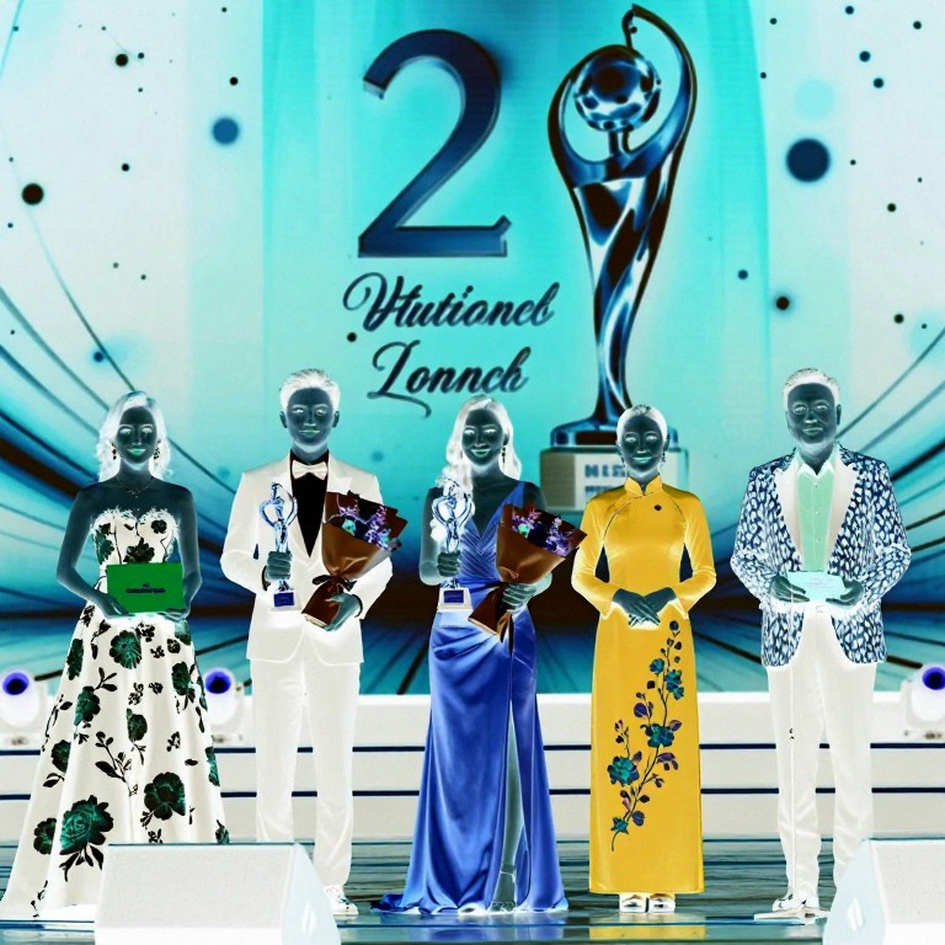
Assembled from the available facts, Vietnam's poomsae squad at Chuncheon has a visible structure: a veteran carrying multiple brackets, a successor carrying the heaviest competitive load, and a male axle holding stability across two cycles. Behind them sits coach Nguyen Thanh Huy, present in both title-winning cycles.
The model has one clear strength and one structural weakness.
The strength is continuity. When a coaching staff dares to change half the card at a decisive moment, that signals a pool deep enough to choose from rather than a single available option. In judged disciplines, where arena experience heavily determines how an athlete performs in front of a panel, having more than one option is a strategic asset.
The weakness lies in the event structure. Poomsae splits into many categories: individual men, individual women, mixed pair, male pair, female pair, male team, female team, multiplied across age brackets. The number of gold medals awarded at a single world championship is large. That is good for nations with broad rosters. It also dilutes the concept of “world champion” in the eyes of a general audience.
A discipline that awards dozens of world titles per edition will have plenty of world champions and very few mainstream stars — two facts that do not contradict each other, but that media routinely merge into one.
Four confederations on the road, and a gap that cannot be measured
The reported path to the final ran through Myanmar, Chinese Taipei, Turkey and Iran, then Denmark in the final. Geopolitically, that crosses Asia and Europe. In a bracket of 27 pairs, that is a genuine breadth test rather than a padded draw.
But one gap is enormous: no scores, no margins, no seeding or ranking information for the opponents.
This leads to an analytical limit worth stating bluntly. Fans want to know how convincing the title was. The published data does not allow an answer. A gold medal can come from a 0.1-point gap or from a gap so wide the panel never hesitated. Those two scenarios tell completely different stories about the standing of Vietnamese poomsae, and we do not know which one applies.
I do not believe in the tactical map. I believe in the crack in the map. The crack here is the silence in the data — and the honest response is to name that silence rather than fill it with emotion.
The economics of a poomsae gold medal
Poomsae is not a pay-per-view product. There is no PPV revenue, no meaningful gate revenue, no percentage-based athlete pay structure. The real financial model is national-federation funding, host-city investment, federation-level commercial partners, and Olympic-movement solidarity support.
So the economic value of the Chuncheon gold is indirect. It does not convert into ticket sales. It converts into three other things: legitimacy for federation budgets, credibility for the national-team program, and enrollment pull at the grassroots level.
In poomsae, a world medal has almost no direct commercial value; it functions as an argument for budgets and a recruitment tool for dojangs.
The genuine commercial asset is Nguyen Thien Phung's repeatable record: two cycles of gold with two different partners. That is a domestic marketing story that sells to Vietnamese media and to domestic taekwondo sponsors. But the value belongs to the Vietnamese taekwondo sector, not to the mainstream sports market.
The source reports no medal bonus figures, no attendance at the Chuncheon venue, and no sponsorship breakdown for the national team. There is not enough data to assess at the business level, and I record that gap rather than guess.
Health risk: the lowest tier in the entire martial-arts domain
Placed on the same risk board as MMA, boxing, kickboxing or sanda, poomsae sits far apart. The two most severe risk categories in combat sport — cumulative brain trauma and weight-cut incidents — are structurally absent. No head contact. No weigh-in. No rehydration protocol.
What remains is repetitive-load musculoskeletal risk: ankles, knees and hips from jump and turn volume; hamstrings and groin from high-kick and end-range postures. This is slow-accumulating risk, manageable through training-load distribution and structured flexibility work.
A less discussed professional risk is income security. Most poomsae athletes are not self-funding prize fighters. They sit inside state systems, military structures or training centres. That brings stability and simultaneously ties their careers to funding policy, which can shift far faster than an athletic career.
From years of watching bouts and scoring panels, I have noticed a pressure that rarely gets mentioned: the psychology of a judged sport. Athletes face no opponent, yet they must stand before a panel, wait for a score, and accept that months of work can be decided by a margin they cannot see. Outsiders treat this as a footnote. Insiders know it requires dedicated psychological support.
The counterintuitive angle: the gold and the crack named Korea
This is the hardest section to write, and the one that most needs writing.
The decisive information sits in the source's acknowledgement that the absence of Korean athletes made the bracket easier.
That line deserves respect on both sides. It does not diminish the value of the gold won by Le Kim and Phung. No athlete chooses their opponents, and a 27-pair bracket spanning four confederations is a real bracket. But it does change how the gold is positioned in the discipline's hierarchy.
Korea is the benchmark nation of poomsae. When the benchmark nation is absent from a bracket, every other nation's medal probability shifts immediately — and any conclusion about “parity with the elite” must wait for direct confrontation.
This is the point Vietnamese sports media habitually skips because it is less attractive than the winning story. But my job is to read structure, not results. And the structure here says: this bracket was winnable, and it was won. The real test has not yet been taken.
A second counterintuitive point concerns naming. The phrase “first gold” in the source means Vietnam's first gold of the 2026 edition. It is entirely different from “first gold in history in this event.” The mixed-pair standard poomsae U50 title was already won by Vietnam in Hong Kong in 2026. Those two readings are easily merged, and when merged, the gold looks like a historic breakthrough when it is in fact a title defence.
That does not diminish the achievement. Defending a title in a judged discipline is harder than winning one for the first time, because panels face comparison pressure against the previous standard, and opponents prepare specifically against the reigning champion. But naming the event correctly is a precondition for analysing it correctly.
The third counterintuitive point concerns program sustainability. Vietnam has a male axle stable across two cycles and a female pool capable of rotation. What is missing is evidence of a next generation deep enough to replace that male axle when he leaves the competitive stage. Long careers delay the problem in this discipline, but they do not remove it. A squad that depends on one rhythm keeper is strong, and fragile.
Truth does not need a microphone — it finds its own way out. Here it travelled through a small line about an absent nation, and through a data gap about winning margins. Those two traces are enough to redraw the picture at its correct scale.
A polymath view catches the same undercurrent
I work across multiple sports: football, athletics, swimming and martial arts. Some consider that scattered. I disagree. A multi-discipline view is not a distraction; it is how you catch the same undercurrent across different rivers.
The undercurrent here is a rule that repeats in every sport: the development system determines outcomes, and the individual is merely the point where the system meets a moment. In football it is squad structure. In athletics it is the training cycle. In poomsae it is the ability to rotate personnel without losing the rhythm.
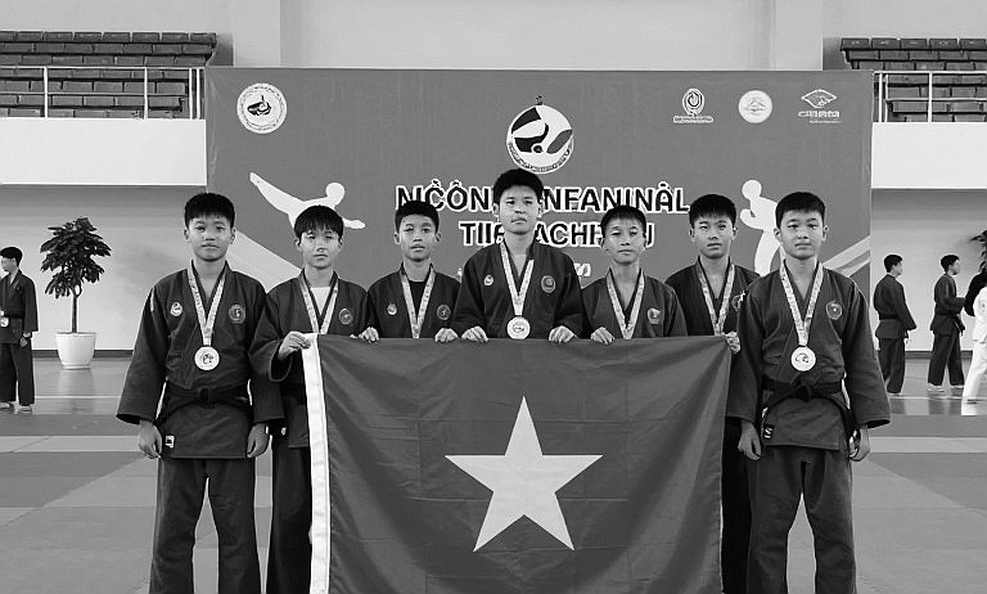
Every race has a corner that only those unafraid of falling can see. Vietnam's poomsae corner is not Chuncheon 2026. It is the next championship, when the bracket includes Korea, when the panel is no longer a familiar unknown, and when the squad must prove it can replace the male axle rather than only half of the female card.
A forward-looking thought
The Chuncheon 2026 gold carries real value, and that value does not reside in the word “gold.” It resides in the fact that the coaching staff demonstrated a rare capability: turning a personnel change into a routine operation rather than a desperate gamble.
The next task is not more celebration. The next task is to convert Nguyen Thien Phung from a single axle into one node in a multi-node system. The next task is to give Vietnamese poomsae something it has never had enough of: athletes across every age bracket, deep enough that a substitution stops being news.
And the hardest task of all may belong to Vietnamese sports media: learning to describe a poomsae gold for what it is — a routine scored higher, not a fight won. Only when we name it correctly do we begin to measure the distance to the top accurately.